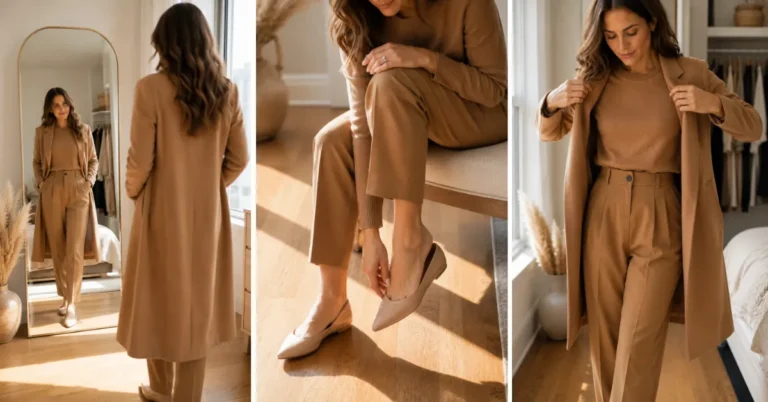
How to Read Workwear Size Charts When You’re Petite?

You measured yourself once three years ago. Wrote down “size 4.” Now you order a 4P in every workwear brand you find online. Half of it goes back. The blazer shoulders droop past your arms. The trousers bunch at the knee. The blouse gaps at the bust and hangs past your hips.
Here is the problem. A 4P at one brand and a 4P at another are not the same garment. Most size charts do not measure the same things either. Some show your body measurements. Others show the measurements of the clothing itself, laid flat on a table. If you do not know which one you are reading, you are guessing. Guessing is expensive.
This guide walks you through petite workwear sizing the right way. You will learn how to take your own measurements. How to read any size chart correctly. And how to stop ordering clothes that look polished on the model but arrive looking borrowed. The whole process takes about 20 minutes the first time. After that, you will have a personal reference card that works across every brand.
No more returns. Pick up a tape measure and let’s get your numbers right.
1. Gather a soft tape measure and one outfit that fits you well
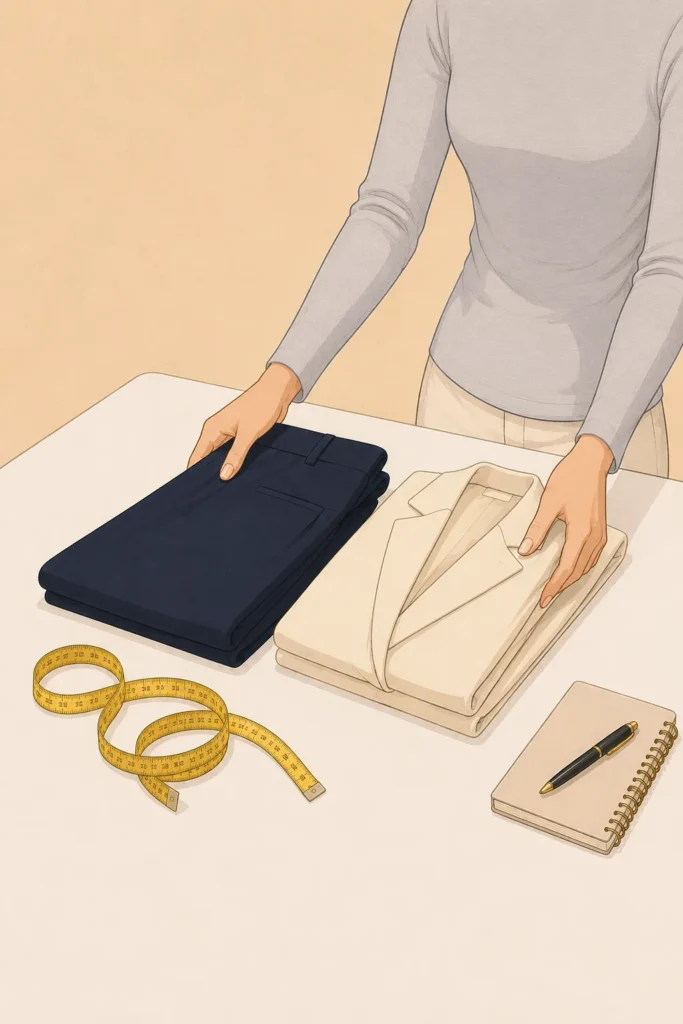
Two things before you open a single size chart. A soft fabric tape measure. Not a metal construction one. And one workwear outfit that already fits you well. That outfit becomes your comparison tool in Step 10.
Put on thin, form-fitting clothes. Stand in front of a mirror. Keep a pen and paper close enough to grab between measurements. Write down each number the moment you get it.
2. Measure your bust, waist, and hips
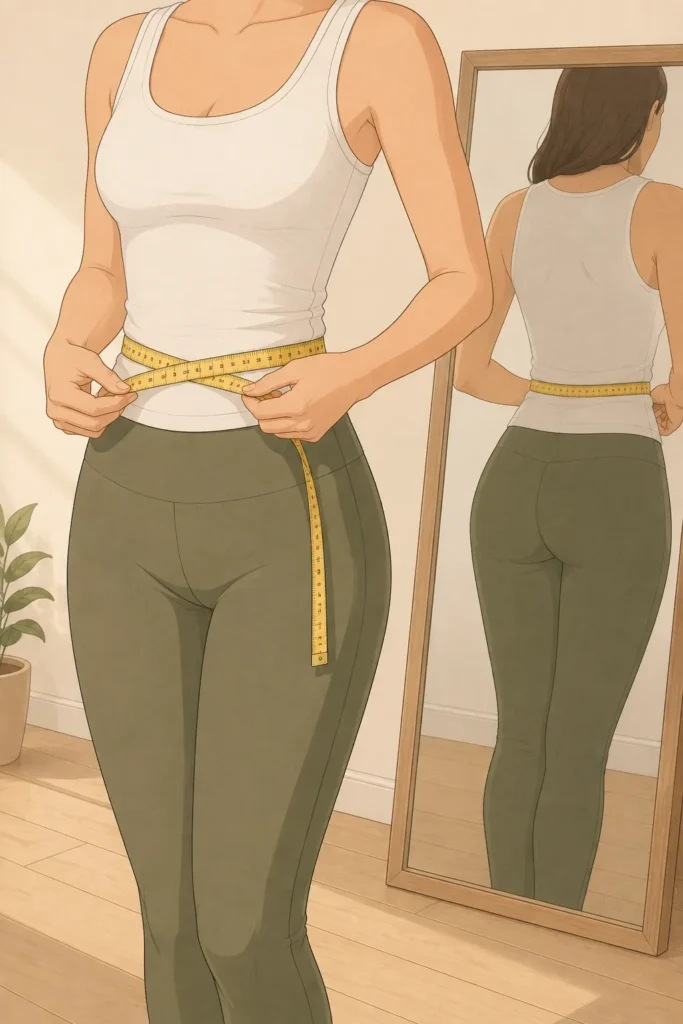
These three numbers are the foundation of every size chart you will ever read. Take them in this order:
- Bust: Wrap the tape around the fullest part of your chest. Run it straight across your shoulder blades. Keep it level and snug. Not tight enough to compress anything.
- Waist: Find the narrowest point of your torso. That is usually about 1 inch above your belly button. Wrap the tape there.
- Hips: Stand with your feet together. Wrap the tape around the widest part of your hips and backside. Keep it parallel to the floor.
Write all three numbers down in inches. Do not round up or down.
3. Measure your inseam from inner thigh to ankle bone
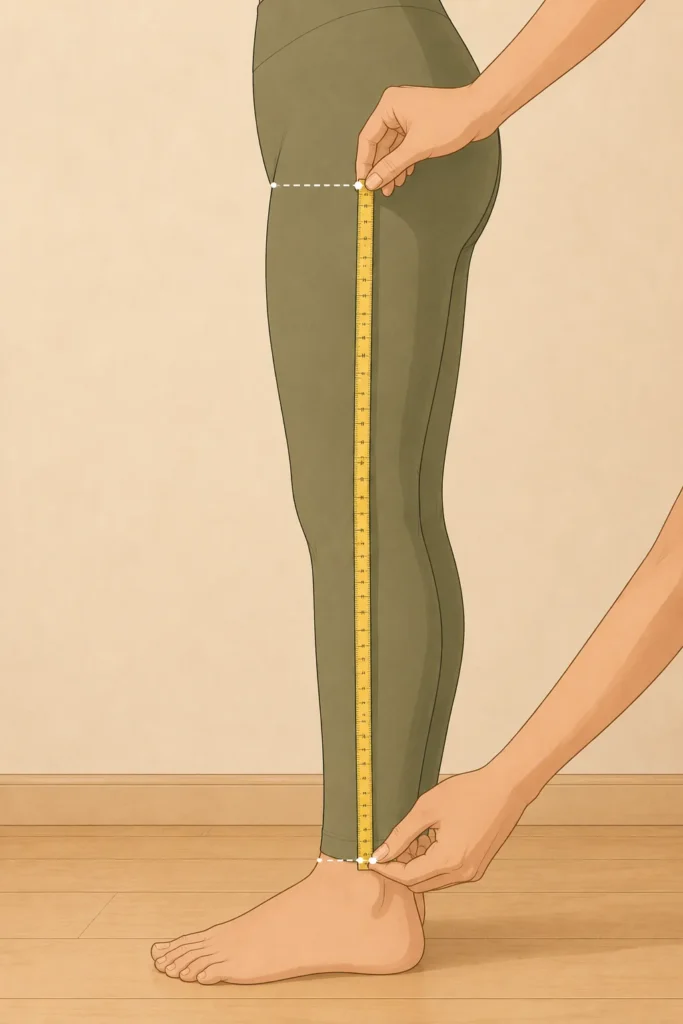
Stand straight. Feet about hip-width apart. Have someone measure from the crease where your inner thigh meets your body, straight down to your ankle bone. Not to the floor. Your ankle bone.
For most petite women, this number falls between 25 and 29 inches depending on height. If nobody is around to help, grab a pair of well-fitting pants instead. Measure from the crotch seam straight down to the hem. That gives you a close enough number to work with.
4. Measure your rise from waistband to crotch seam
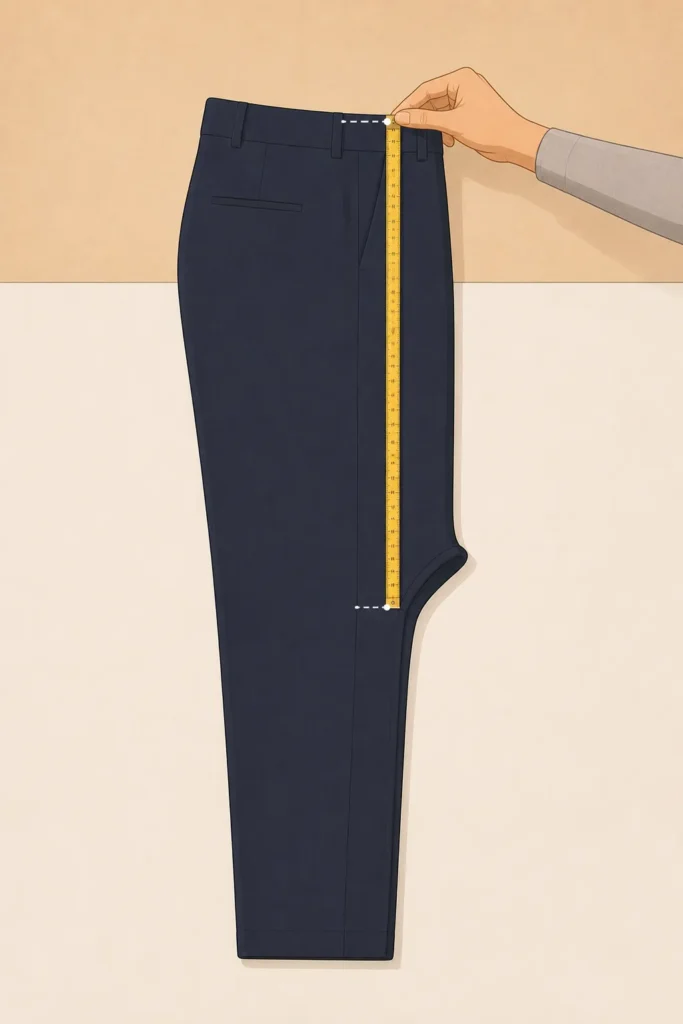
Most petite women skip this measurement. That is exactly why their work pants never sit right. The rise is the distance from your natural waist down to your crotch. It controls where the waistband lands on your body.
Worthy Reading : How to Wear Wide Leg Jeans Petite Without Looking an Inch Shorter
Grab those well-fitting pants from Step 1. Lay them flat. Measure from the top of the waistband straight down to the crotch seam. Write that number down. For petite frames, the rise on work trousers usually falls between 8 and 10 inches.
5. Measure your shoulder width and sleeve length
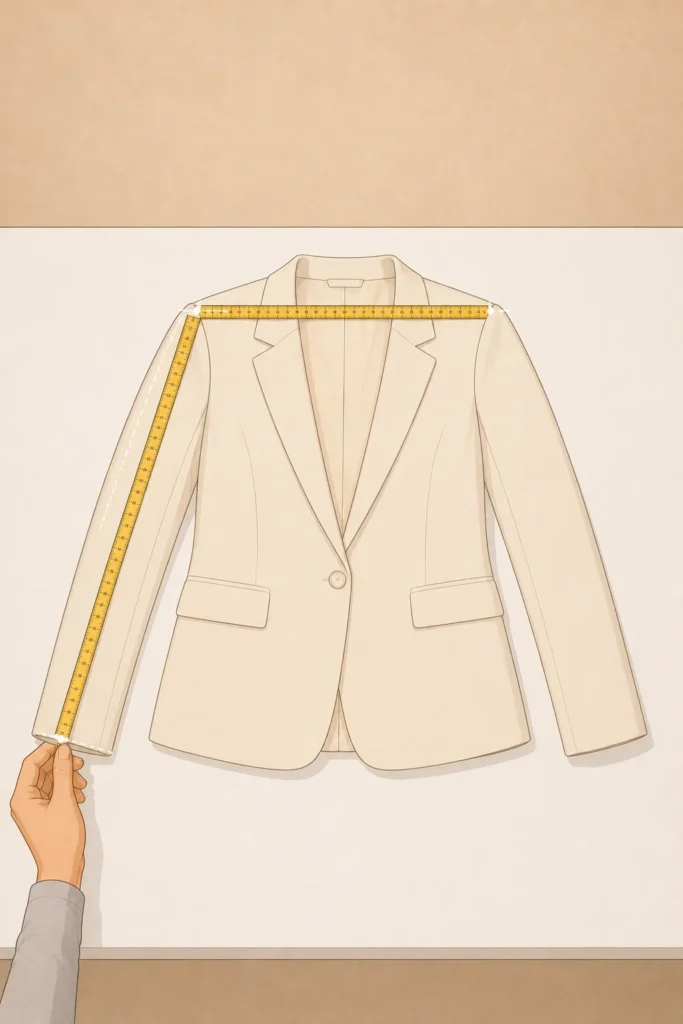
If you buy blazers, structured blouses, or tailored jackets for work, these two numbers decide whether the piece looks polished or borrowed.
i) Shoulder width
Have someone measure across your upper back from one shoulder bone to the other. The tape should sit right where your arm meets your shoulder on each side. Most petite women measure between 14 and 15.5 inches here.
Related: 22 Petite Blazer Outfits Styled Around the Right Shoulder Fit
ii) Sleeve length
Start from the center back of your neck. Run the tape across your shoulder, down your arm, and stop at your wrist bone. This one is hard to do alone. If you cannot get help, measure a blazer sleeve that fits you well instead. Lay the blazer flat and measure from the shoulder seam to the cuff.
6. Find the petite size chart for the specific brand and item
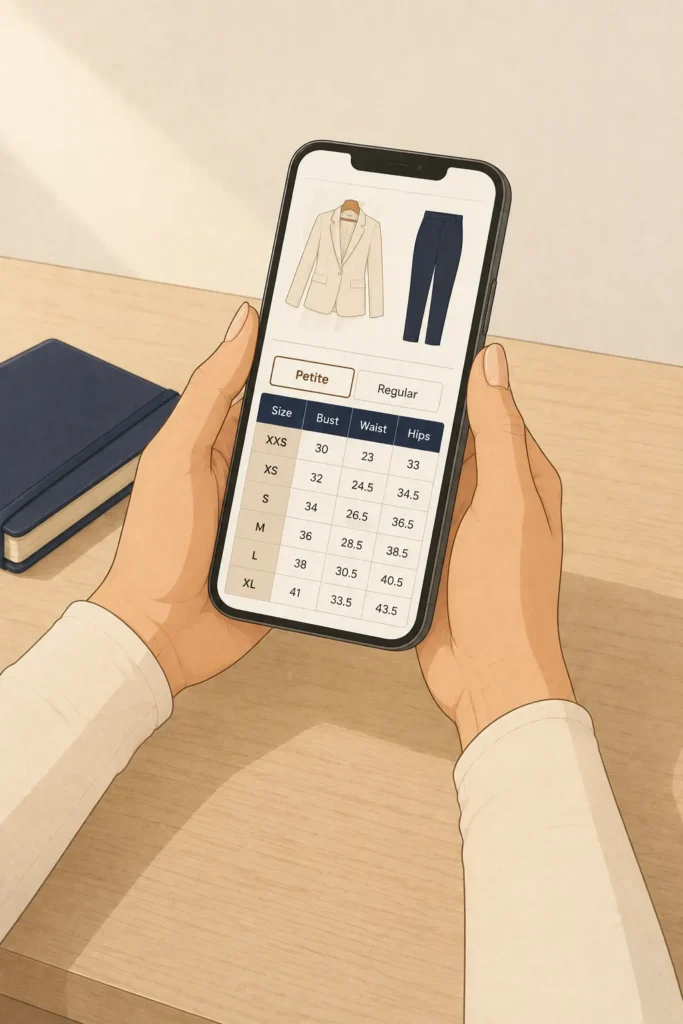
Here is where most people get tripped up. They Google “petite size chart” and use a generic one. That will not work. Every brand cuts differently.
Go to the product page for the exact item you want to buy. Scroll past the photos. Look for a link that says “Size Guide,” “Size Chart,” or “Fit Details.” It is usually near the size dropdown or in a small tab below the product description.
Click it. Make sure it says “Petite” at the top. Many brands show their regular chart by default. You need to toggle or scroll to the petite version. If the brand does not have a separate petite chart, that is a red flag. It often means they shortened the length but did not adjust the proportions.
Read next: Fix These 7 Petite Work Outfit Mistakes Before Your Next Monday
7. Check whether the chart lists body measurements or garment measurements
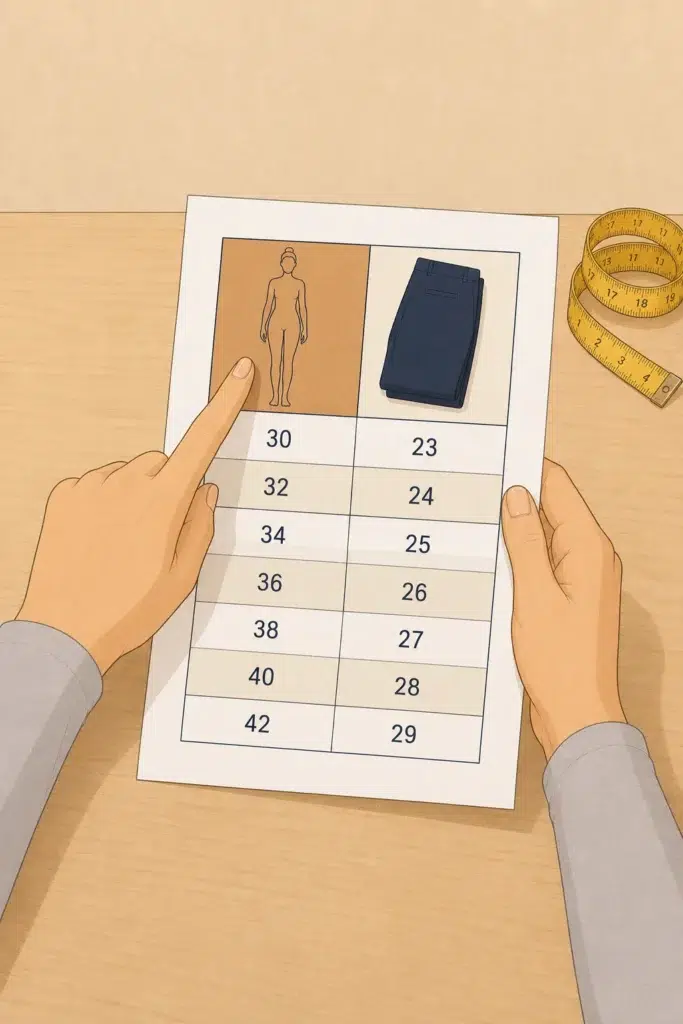
This is the single biggest reason petite women order the wrong size online. And almost nobody talks about it.
A body measurement chart shows what your body should measure to fit into that size. A garment measurement chart shows what the clothing itself measures when laid flat on a table. The difference matters. A blazer in size 4P might show a 37-inch bust on a garment chart.
That does not mean you need a 37-inch bust. The garment includes 2 to 4 inches of extra room called “ease.” Your actual bust might be 33 or 34 inches and that blazer would fit you well.
Look at the top of the chart. It should say “Body Measurements” or “Garment Measurements.” Some brands label it “Flat Measurements.” If there is no label, check the numbers. When the bust column shows numbers much larger than typical body sizes, you are looking at garment measurements.
8. Match your widest measurement to the chart first
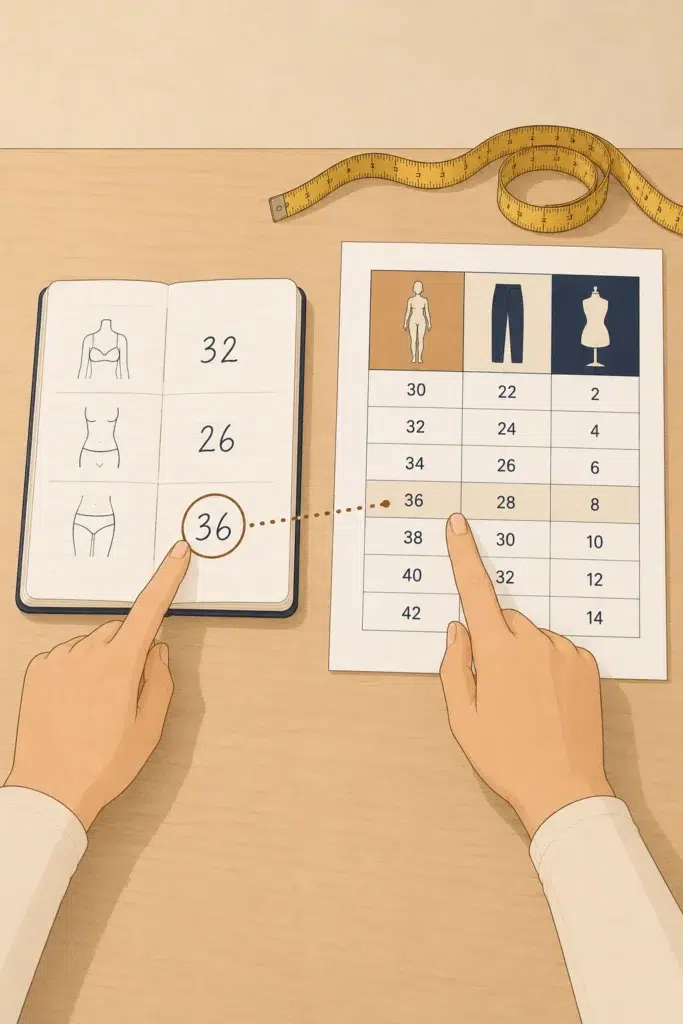
Do not start with your waist. Start with whichever of your three core numbers (bust, waist, hips) is the furthest from the chart’s center range. That is your anchor measurement.
Here is why. If your bust is a size 4P but your hips are a size 6P, ordering the 4P gets you a blazer that buttons but trousers that pull across the thighs. Your widest measurement tells you the minimum size that will fit your frame. A waist that runs smaller can be fixed with a belt or a quick dart at the tailor. Hips that are too tight cannot be fixed at all.
Find your anchor number on the chart. That is your starting size.
✓Measure your bust, waist, and hips
✓Measure your inseam from inner thigh to ankle bone
✓Measure your rise from waistband to crotch seam
✓Measure your shoulder width and sleeve length
✓Find the petite size chart for the specific brand and item
✓Check whether the chart lists body or garment measurements
✓Match your widest measurement to the chart first
9Cross-check the vertical proportions before you add to cart
10Flat-measure a workwear piece you already own and compare
11Build a personal fit reference card you can reuse
9. Cross-check the vertical proportions before you add to cart
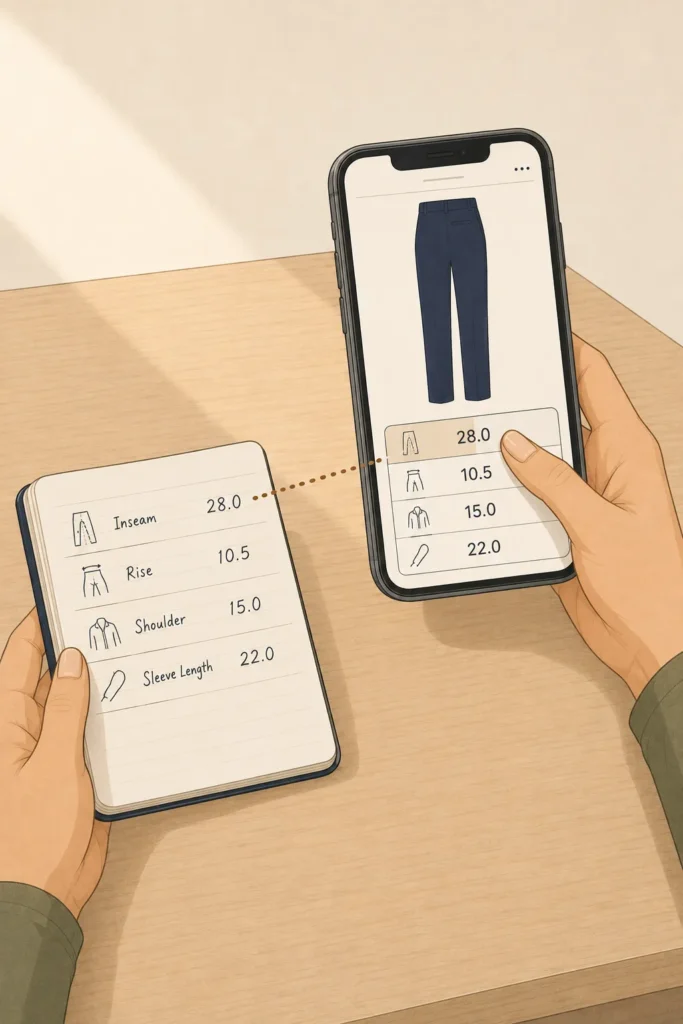
Your size number is set. But do not hit “Add to Cart” yet. Petite workwear sizing is not only about bust, waist, and hips. The vertical measurements are where regular and petite sizes differ most.
Pull up the product details. Look for inseam, rise, shoulder width, and sleeve length. Compare each one to the numbers you wrote down in Steps 3 through 5. Even a 1-inch difference in rise can change where the waistband sits. A 2-inch difference in sleeve length means the cuffs will cover your hands.
10. Flat-measure a workwear piece you already own and compare
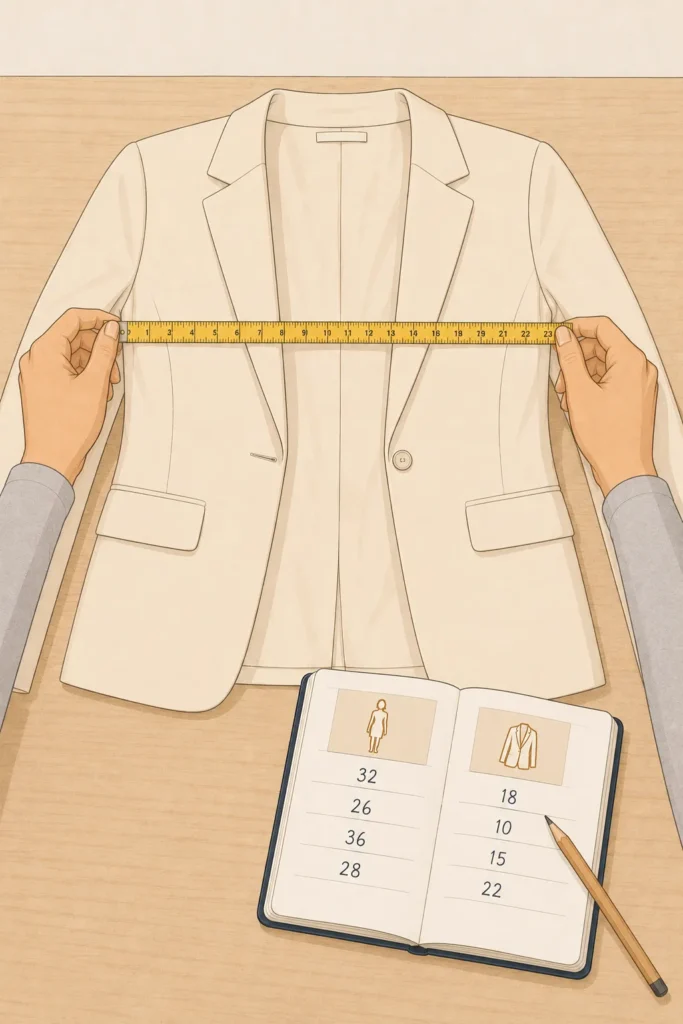
That blazer or pair of trousers from Step 1? Time to use it. Lay it flat on a table. Smooth out any wrinkles. Now measure it the same way a brand would.
For a top or blazer, measure across the chest from armpit seam to armpit seam. That gives you the half-chest number. Double it for the full garment bust. For trousers, measure the waistband from one end to the other. Double that too. Then measure the inseam from crotch seam to hem.
Write these numbers next to your body measurements. Now you have two columns. Your body. And a garment that fits. When you look at a brand’s size chart, you can compare garment-to-garment instead of guessing how much ease you need. This trick cuts out most of the math.
11. Build a personal fit reference card you can reuse
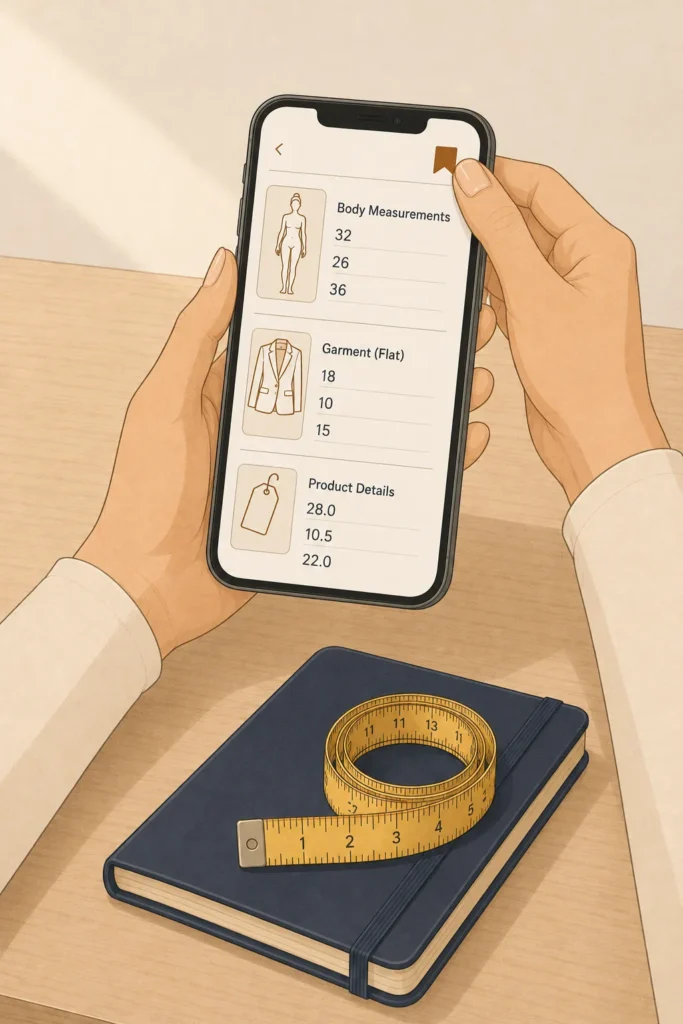
Open your phone’s notes app. Create a new note titled “My Petite Sizing.” Fill it in with everything you have written down across Steps 2 through 10. Organize it into three sections:
Section 1 — My Body Bust, waist, hips, inseam, rise, shoulder width, sleeve length. All in inches.
Section 2 — My Best-Fitting Garments The flat-lay measurements from Step 10. Label each one by garment type. “Black Ann Taylor trousers: waist 27, hip 36, inseam 27, rise 9.” “Navy Banana Republic blazer: chest 36, shoulder 15, sleeve 22.”
Section 3 — My Sizes by Brand Leave this blank for now. Every time you order something that fits, add the brand and size here. After three or four purchases, you will have a running record that tells you your size at each brand without checking the chart again.
That is your reference card. Save it somewhere you can pull it up while you shop. Screenshot it. Pin it. Bookmark it. Twenty minutes of measuring now saves you hours of returns later.
Frequently Asked Questions
Conclusion
You now have a full set of body measurements, a way to read any brand’s size chart, and a reference card you can pull up on your phone every time you shop. That is more sizing information than most people carry around in a lifetime of buying clothes.
Start with one purchase. Use your numbers. Compare your measurements to the chart. Check the vertical proportions. See how close the fit is when the package arrives.
Related. : How to Look Taller at Work With 9 Outfit Fixes
The more you use your reference card, the faster it gets. If this guide helped you nail your petite workwear sizing, save it to your Pinterest board so you can find it again before your next shopping trip.