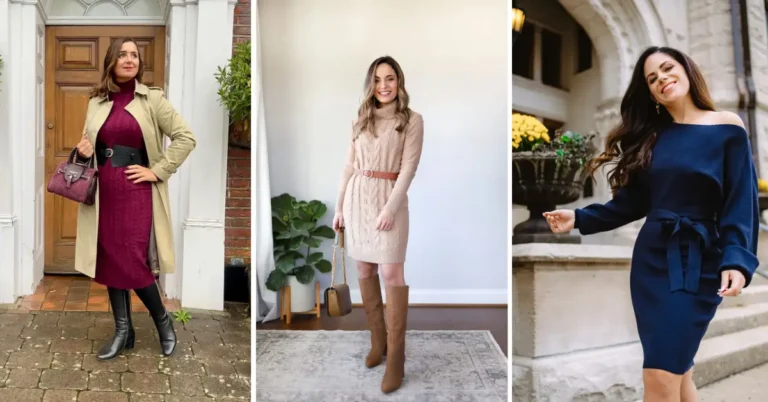
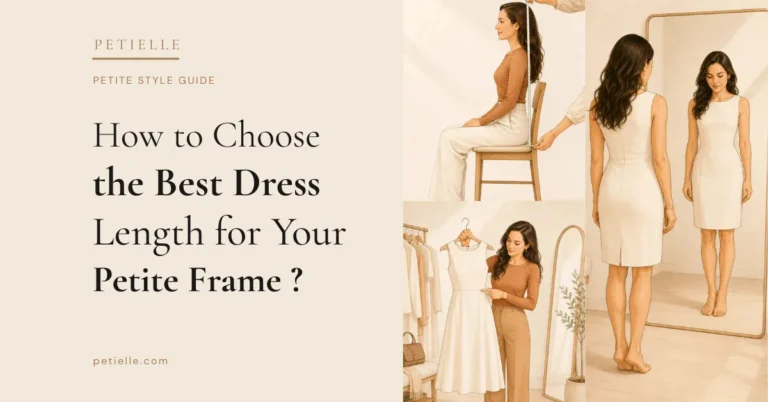
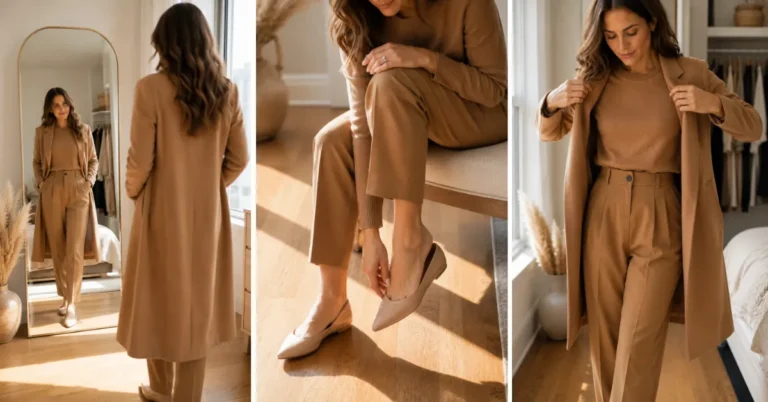
20 Petite Styling Tricks That Make You Look Taller (Head to Toe)

The biggest mistake most petite women make isn’t choosing the wrong style. It’s building outfits without knowing which petite styling tricks are quietly working against them. A slightly-too-long cardigan. A round-toe flat. An ankle strap. None of these feel like a big deal on their own. Stack them together, and they can take two or more visual inches from your height before you’ve even left the house.
This guide walks you through 20 specific tricks in the exact order you’d use them to build a real outfit — from your measurements to your shoes to your last accessory. Each step targets one part of the visual-height equation. By the end, you’ll have an outfit that creates a clean, unbroken vertical line from shoulder to floor. That line is the entire trick. Everything here is designed to build it.
The whole process takes 20 to 30 minutes the first time you go through it. Once the habits are set, you’ll move through them automatically. Grab a full-length mirror, pull out what’s in your wardrobe right now, and start here.
Total Time
20–30 min
Active Time
20–30 min
Difficulty
Beginner
What You Need
- 📏 Soft measuring tape
- 👖 High-waisted pants, skirts, or jeans
- 👕 Fitted or cropped tops
- 🔲 Thin belt in a neutral color
- 🧥 Cropped jacket or blazer
- 👝 Small, structured handbag
- 👠 Pointed-toe shoes or heels
- 📿 Long, vertical jewelry
- 🪞 Full-length mirror
- ✂️ Tailor contact (for Step 20)
At a Glance — All 20 Steps
- Measure your inseam and torso length
- Build around a single color family
- Pull on high-waisted bottoms first
- Pick a hem at or above the knee
- Choose vertical stripes, not horizontal
- Tuck your shirt at the natural waist
- Choose a V-neck or open neckline
- Layer with a cropped jacket
- Swap your oversized bag for a smaller one
- Add a thin belt at your natural waist
- Select pointed-toe shoes
- Match shoe color to skin tone or pants
- Add at least a small heel
- Avoid ankle straps that cut across your leg
- Choose long, vertical jewelry
- Pull your hair up to expose your neck
- Choose smaller-scale prints
- Use vertical details to draw the eye upward
- Check all proportions in a full-length mirror
- Get your best pieces tailored
1. Measure Your Inseam and Torso Length Before You Pick Anything Out
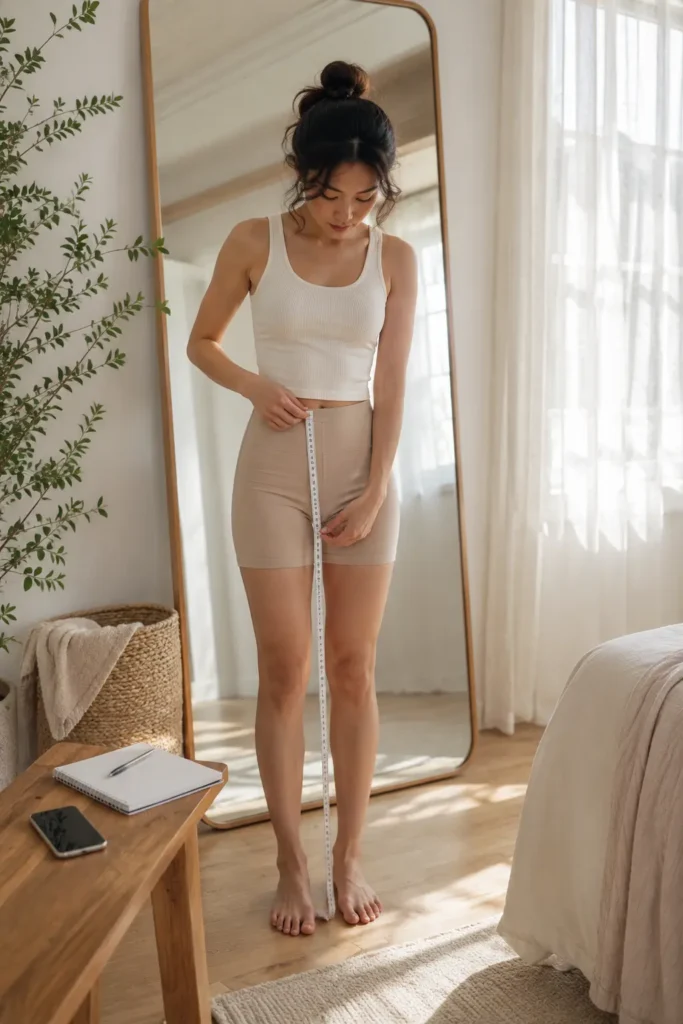
You can’t fix proportion problems if you don’t know your numbers. Stand in bare feet and run a soft measuring tape from your crotch to the floor — that’s your inseam. T
hen measure from the top of your shoulder straight down to your natural waist, the narrowest point of your torso. Write both numbers down and save them in your phone. Every step in this guide depends on knowing exactly where your waist sits.
2. Build Your Outfit Around a Single Color Family
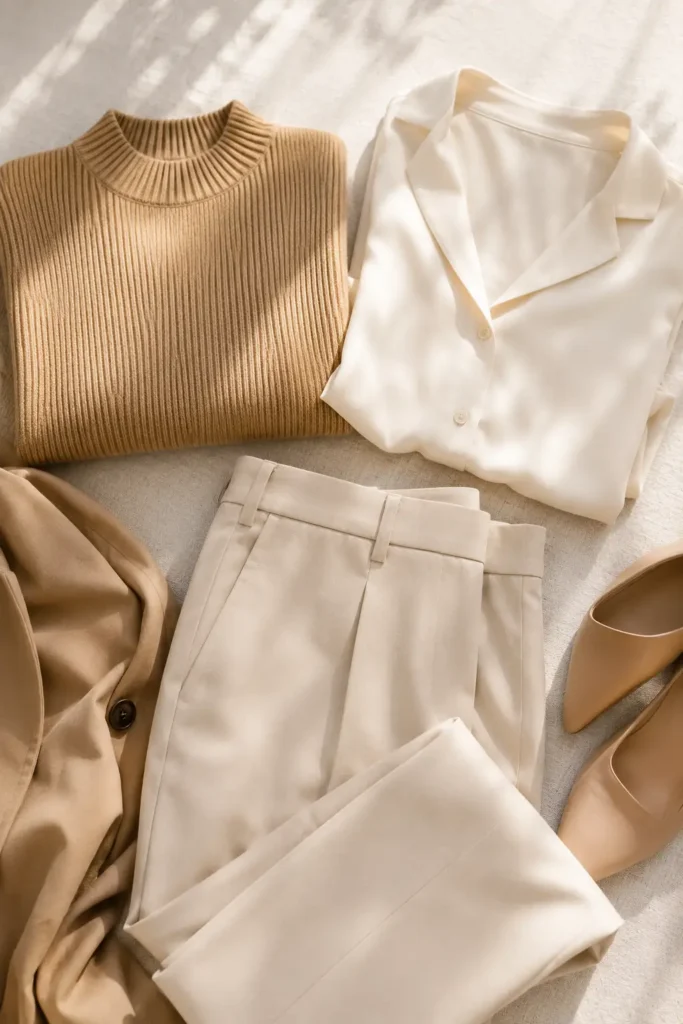
Wearing one color from shoulder to ankle — or staying within the same tonal range — creates an unbroken vertical line that the eye reads as height. No hard horizontal color break means no visual “cut” dividing your body into two shorter halves.
This isn’t about all-black everything. Navy with indigo jeans works. Cream with a camel sweater works. The goal is one continuous shape, not a perfect matched set.
3. Pull On High-Waisted Bottoms First — They Do the Heaviest Lifting
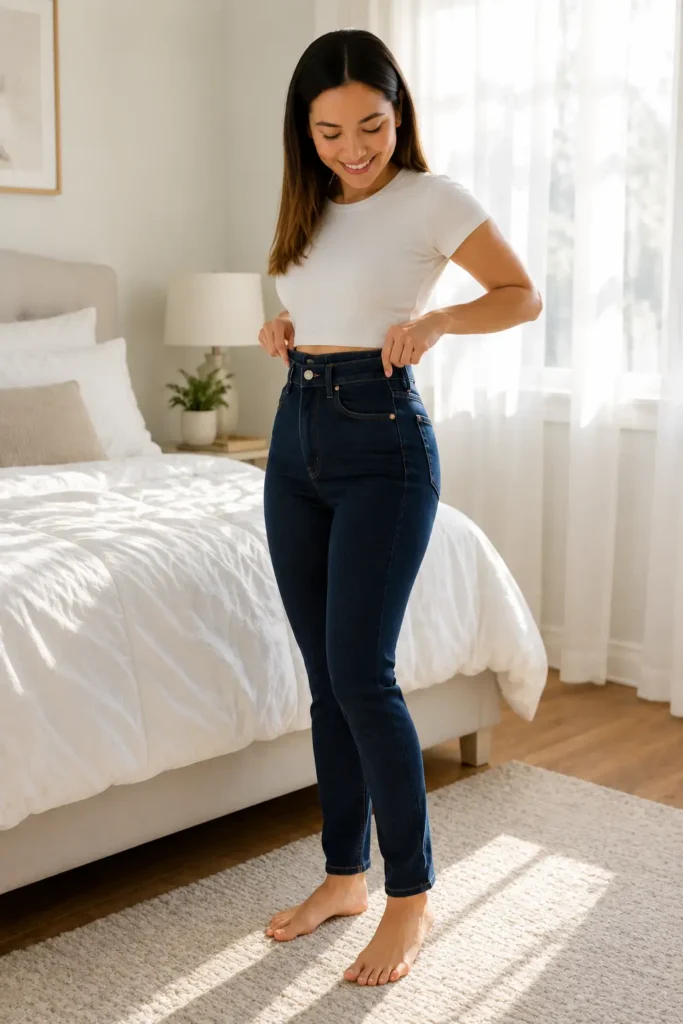
High-waisted pants, jeans, or skirts sit at least 1 inch above your belly button. That raised waistline pushes your body’s visual midpoint upward, which makes your legs read as longer and your torso as leaner at the same time.
No other single garment in your closet does as much work for a petite frame. If the back waistband gaps or folds over on itself, the fit is wrong — pin the spot and flag it for your tailor.
4. Pick a Hem Length That Hits at or Above the Knee
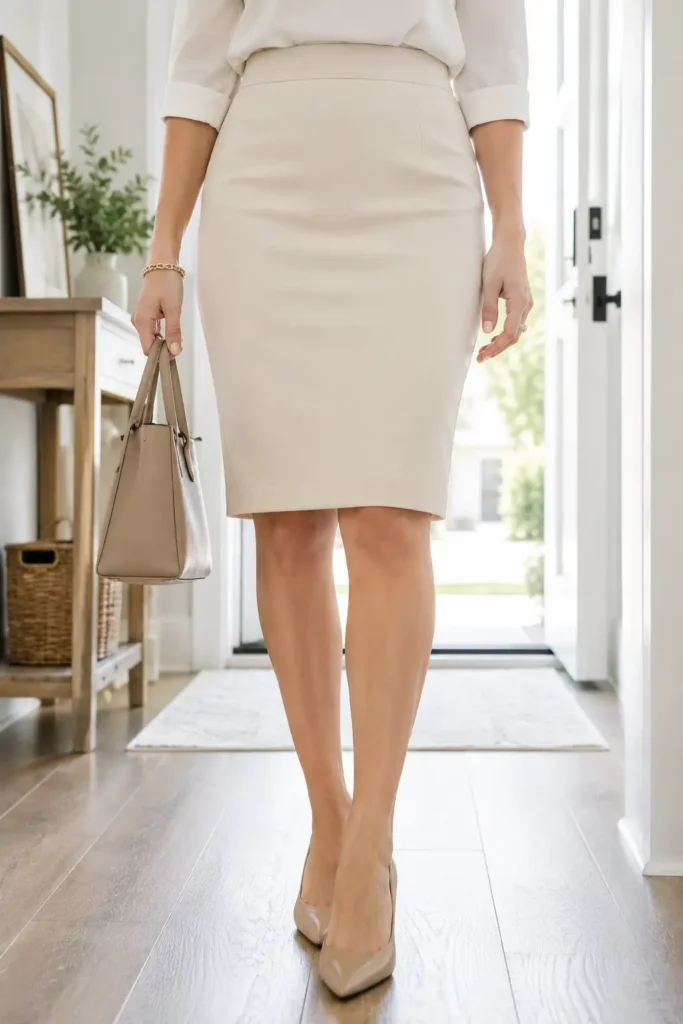
At or above the knee is the benchmark. Below it, fabric covers leg and breaks the vertical line you’ve been building since Step 1 — and every inch past the knee costs you visual height. If you love a midi length, pair it with a monochromatic top and a pointed-toe heel. That combination recovers some of what you’d otherwise lose.
5. Reach for Vertical Stripes, Never Horizontal Ones
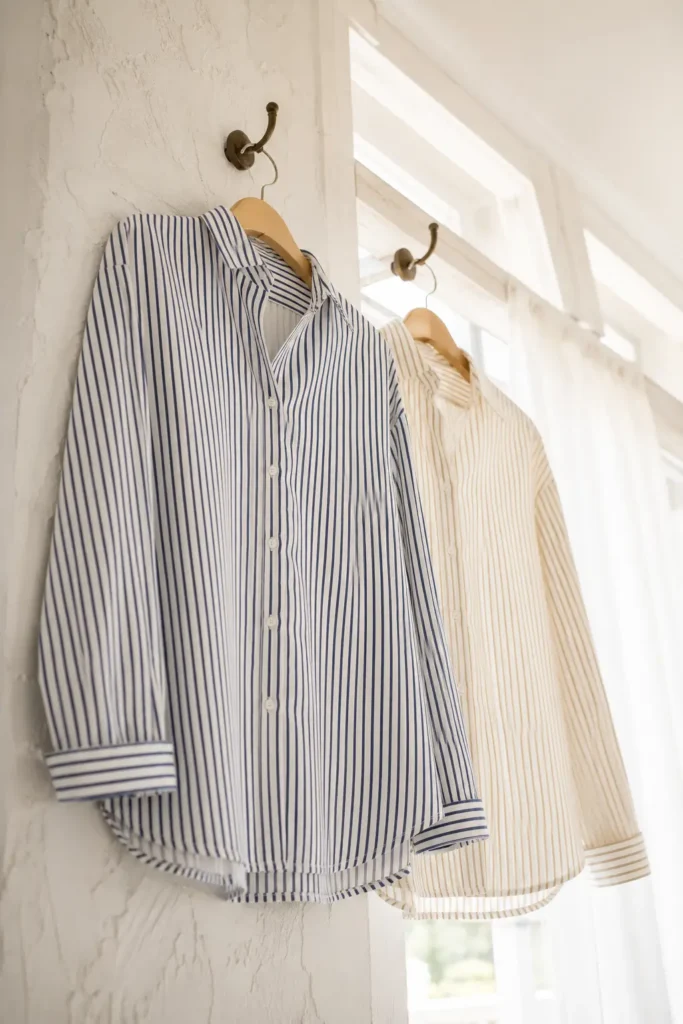
Horizontal stripes do exactly one thing well on a petite frame: they add width. Vertical stripes pull the eye straight up and down, reinforcing the unbroken line you’ve been constructing. Thin pinstripes are the strongest version of this. Wider vertical stripes still work — the effect is subtler, but it’s there. The direction of the stripe matters more than its color or thickness.
⚠️ Heads Up
Diagonal stripes feel like they should count as “kind of vertical” — they don’t. A wide chevron or bias-cut stripe still cuts a horizontal line across your body the moment you put it on. Stick to stripes that run straight from shoulder to hem.
6. Tuck Your Shirt in at the Natural Waist
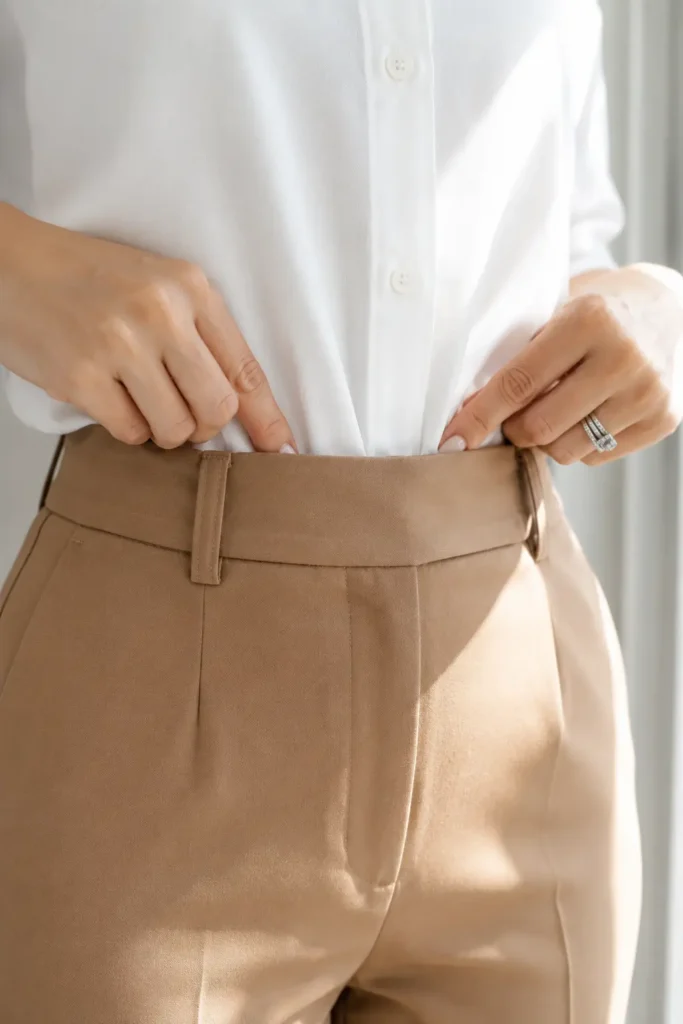
Right at the waistband of your high-waisted bottom — that exact point — is where the tuck lands. Pull the shirt down snug first, then tuck all the way around, not just across the front panel. A tuck that gaps or rides up on the sides by midday creates a loose horizontal band of fabric right where you need a clean, unbroken line.
💡 Pro Tip
Wearing a flowy or oversized top? A front half-tuck — tucking only the center-front section in and leaving the sides loose — achieves almost the same waist-defining effect and looks intentional rather than rushed. Avoid tucking in anything boxy or structured this way; it bunches.
7. Choose a V-Neck or Open Neckline to Lengthen Your Upper Body
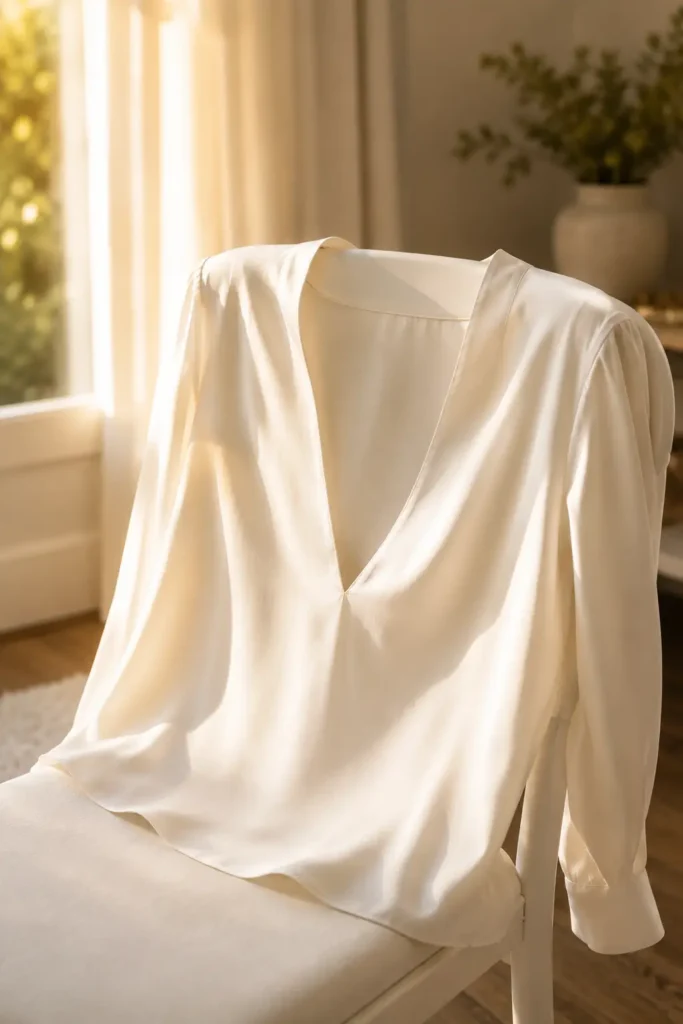
The neckline is the first place the eye lands, which makes it one of the most powerful height tools in your outfit. A V-neck creates a downward point that pulls the eye vertically and opens the chest, making your neck and upper torso read as longer.
Crew necks, boat necks, and turtlenecks close off that space and visually shorten the top half. A scoop neck sits right in the middle — it can work if it’s not too wide. When there’s doubt, the V-neck wins.
8. Layer With a Cropped Jacket — Not a Long One
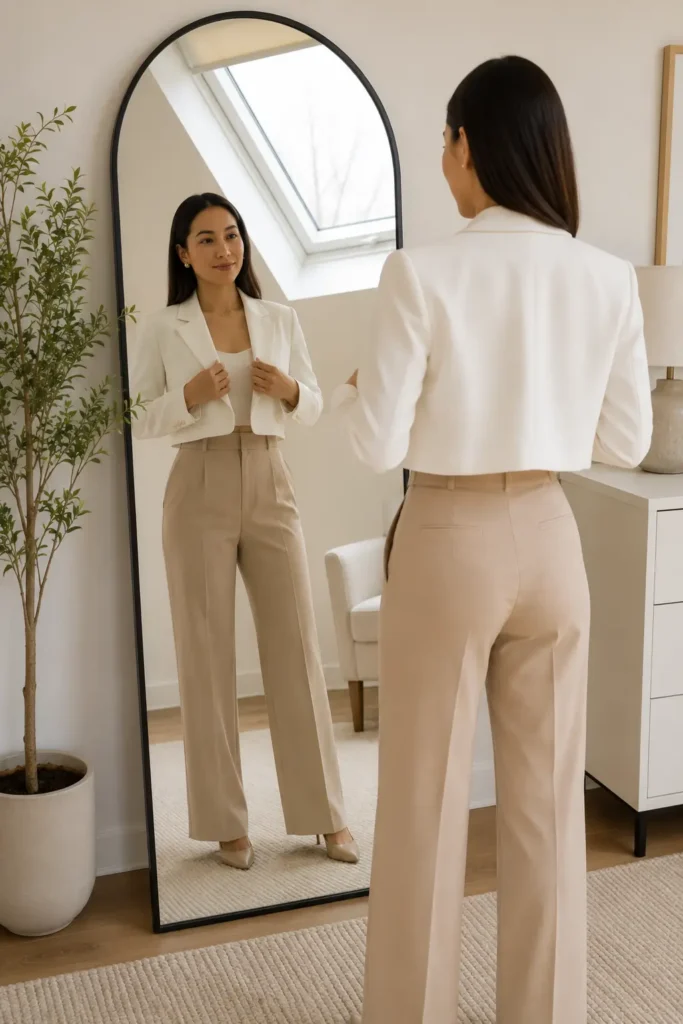
Long blazers and longline cardigans look polished in theory. The problem is anything hitting at mid-hip or lower draws a hard horizontal line right across the widest part of your body — and it cuts your visible leg length at the same time.
A cropped jacket should end at or within 1 inch above your waistband. That’s the number to check in the mirror, not where it falls relative to your belly button.
💡 Pro Tip
If your cropped jacket is slightly too long, a skilled tailor can shorten the hem in under 30 minutes. It’s one of the cheapest alterations you can make — usually under $25 — and it turns a near-miss piece into one that works perfectly on your frame.
9. Swap Your Oversized Bag for a Smaller, Structured One
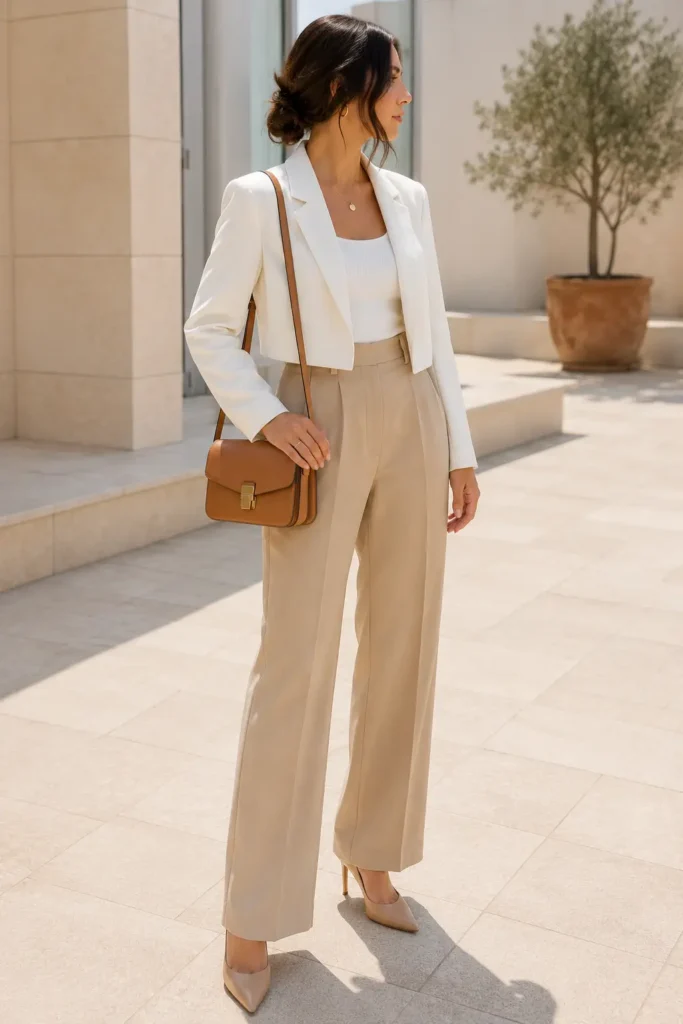
Anything wider than 12 inches starts competing with your frame proportionally — and on a petite body, an oversized tote can make you look swallowed rather than styled.
A structured mini bag, a small crossbody worn high on the hip, or a clutch tucked under your arm all keep the eye moving up rather than anchoring it down. The bag should complement your silhouette, not interrupt it.
10. Add a Thin Belt Exactly at Your Natural Waist
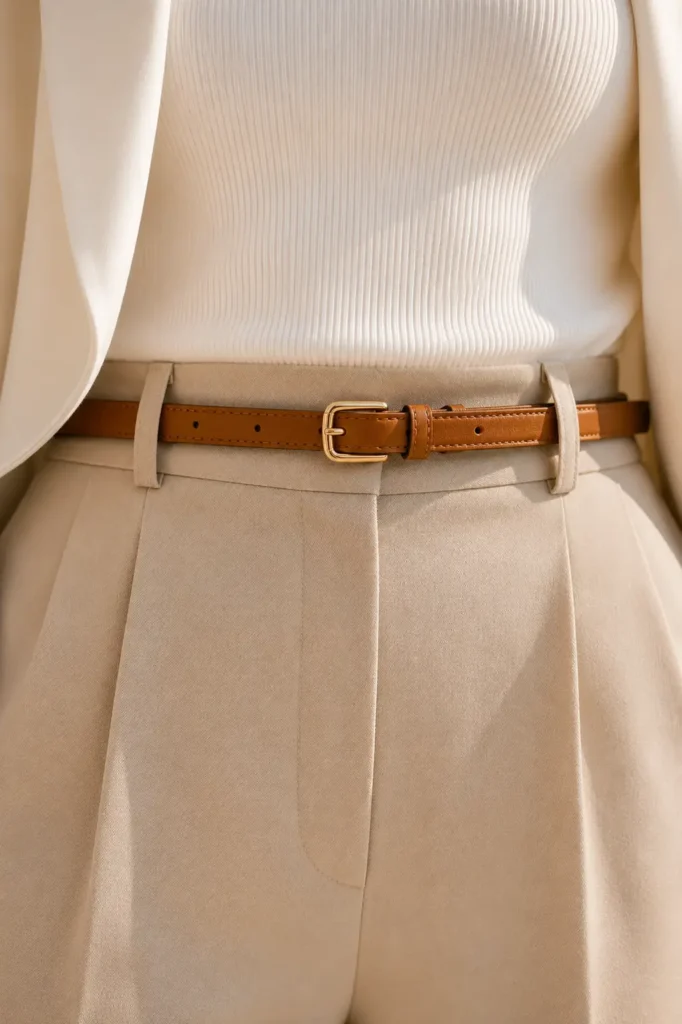
Width is everything here. A belt 1 inch wide or under defines the waist without broadcasting itself. Go wider and you create a thick horizontal band right at your midpoint — undoing the clean vertical line you’ve spent the last nine steps building. Match the belt color to your top or your pants and it disappears into the outfit. That invisible waist anchor is exactly the effect you’re after.
11. Select Pointed-Toe Shoes Instead of Round-Toe Ones
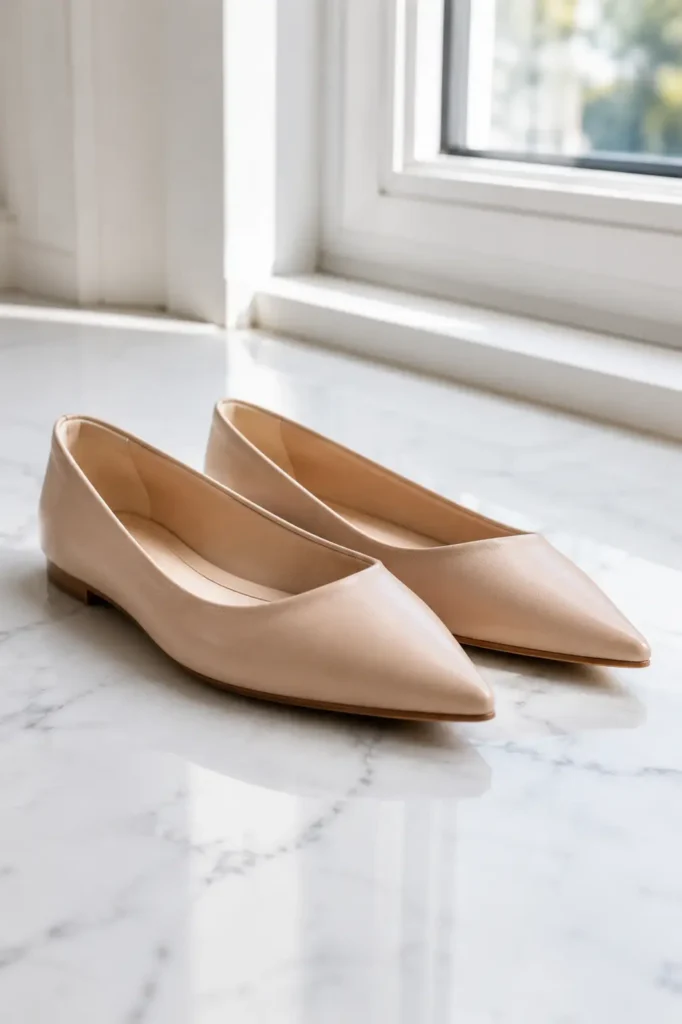
Round-toe flats create a blunt visual stop at the end of your leg. The eye arrives at that wide, curved toe and reads “end of leg” — and your height gets cut off right there.
A pointed toe reverses that. It extends the line of your foot forward, borrowing an inch or two of visual length from thin air. This works in flat shoes too. A pointed-toe ballet flat will do more for your proportions than a round-toe kitten heel with a small lift. The shape matters more than the heel height.
12. Match Your Shoe Color to Your Skin Tone or Your Pants
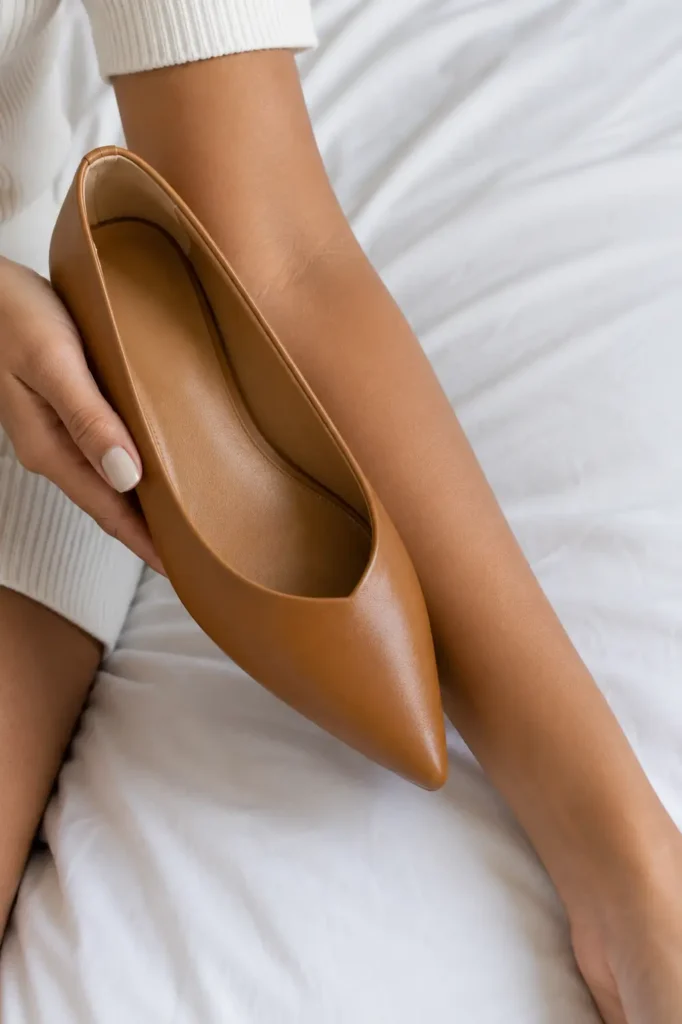
The contrast between your shoe and your leg is what costs you height — not the shoe itself. When the shoe color blends into your skin tone (nude shoes) or your pants (dark shoes with dark trousers), the eye travels past the shoe without stopping.
That unbroken line reads as leg length. A white shoe with dark pants, or a black shoe with light trousers, creates a hard horizontal break at the ankle — and that break is what visually shortens you.
💡 Pro Tip
Nude doesn’t mean beige. Nude means closest to your skin tone. If you have deep brown or rich tan skin, a beige shoe creates contrast — which defeats the purpose entirely. Look for shoes described as “deep nude,” “caramel,” or “warm brown” and hold them against your wrist before buying. The right nude disappears against your skin. The wrong one adds a color block right where you don’t want one.
13. Add at Least a Small Heel — Even 1 Inch Works
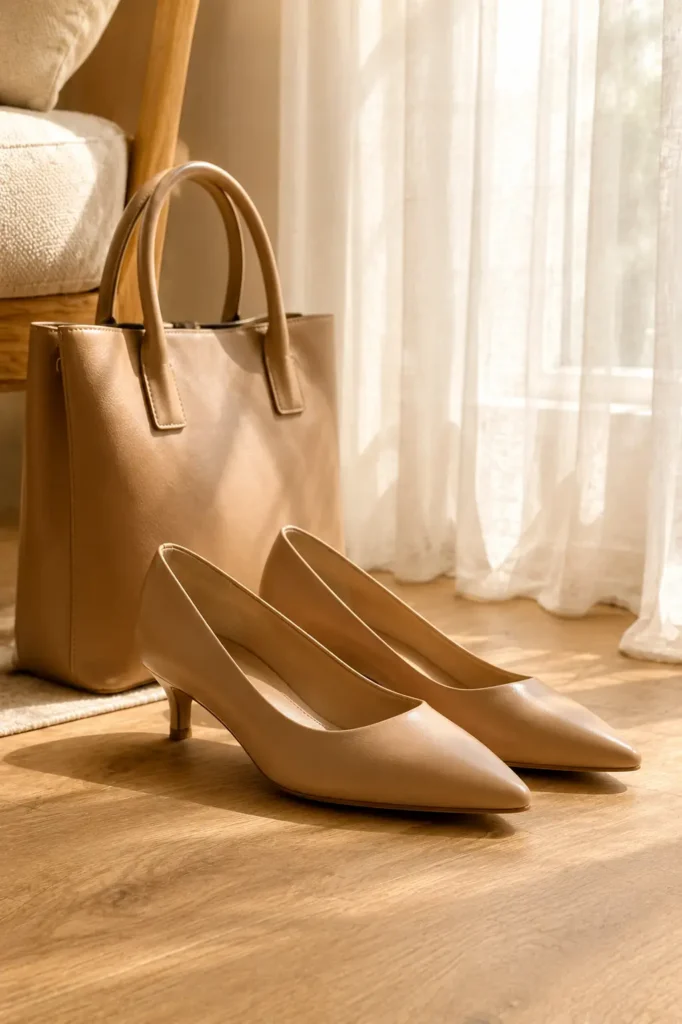
1 inch of heel lift changes your posture, your stride, and the angle of your leg line in a way that no flat shoe replicates. A kitten heel, a low block heel, a slight wedge — any of these work.
The lift doesn’t need to be dramatic. What it needs to do is tilt your foot slightly forward, which elongates your calf and straightens your posture automatically. Both of those things add perceived height before anyone looks at your outfit.
14. Avoid Ankle Straps That Cut Across Your Leg
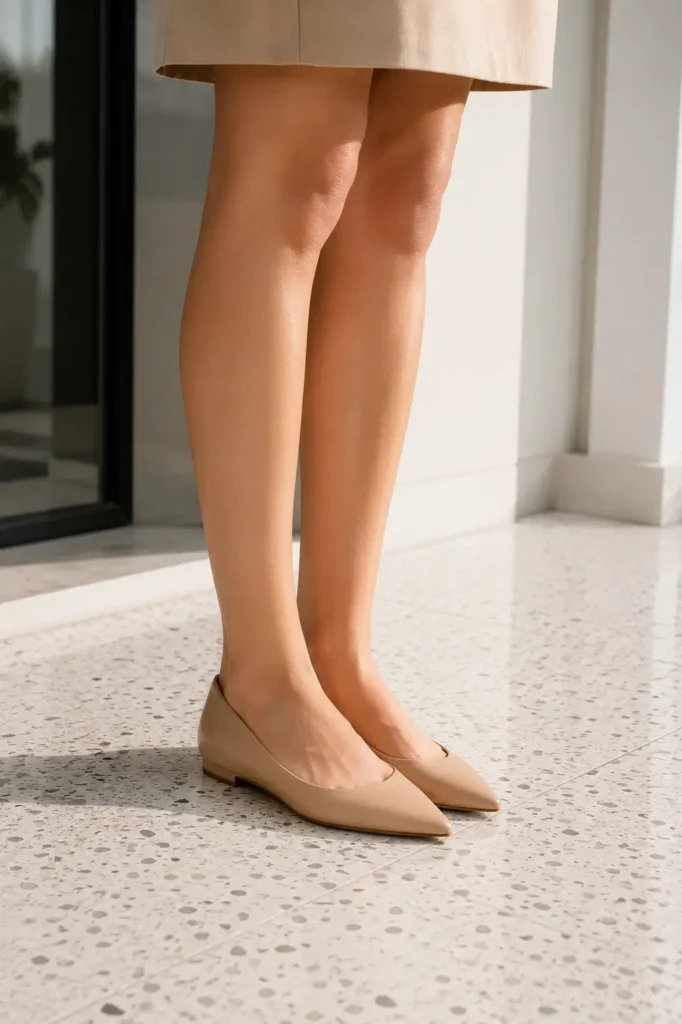
An ankle strap draws a horizontal band across the narrowest, longest part of your leg — the ankle. It works like a visual bracket: the eye reads “leg ends here” the moment it sees that strap. The shoe below reads as separate from your leg instead of an extension of it.
⚠️ Heads Up
This applies even to thin, delicate ankle straps — it’s the horizontal placement that causes the problem, not the weight of the strap. If you love a sandal that has one, try matching the strap color as closely as possible to your skin tone. It won’t eliminate the effect entirely, but it softens the contrast enough to matter.
15. Skip Chunky Jewelry and Reach for Long, Vertical Pieces Instead
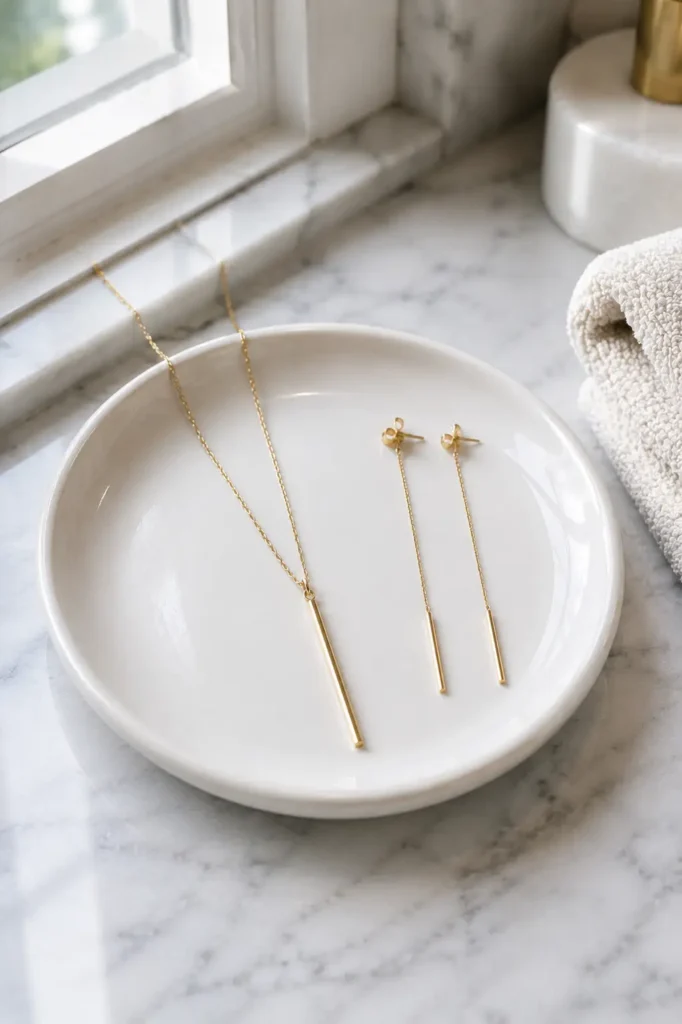
Wide chokers, big statement earrings, and thick layered chains all introduce horizontal weight at your neckline — the one place where you’ve already worked to create length with your V-neck.
A long pendant necklace that drops below your collarbone reinforces the downward vertical line. Thin drop earrings do the same for the face and neck. The rule isn’t “wear less jewelry.” It’s “wear jewelry that moves the eye in the same direction as everything else — downward and through.”
16. Pull Your Hair Up to Expose Your Full Neck Length
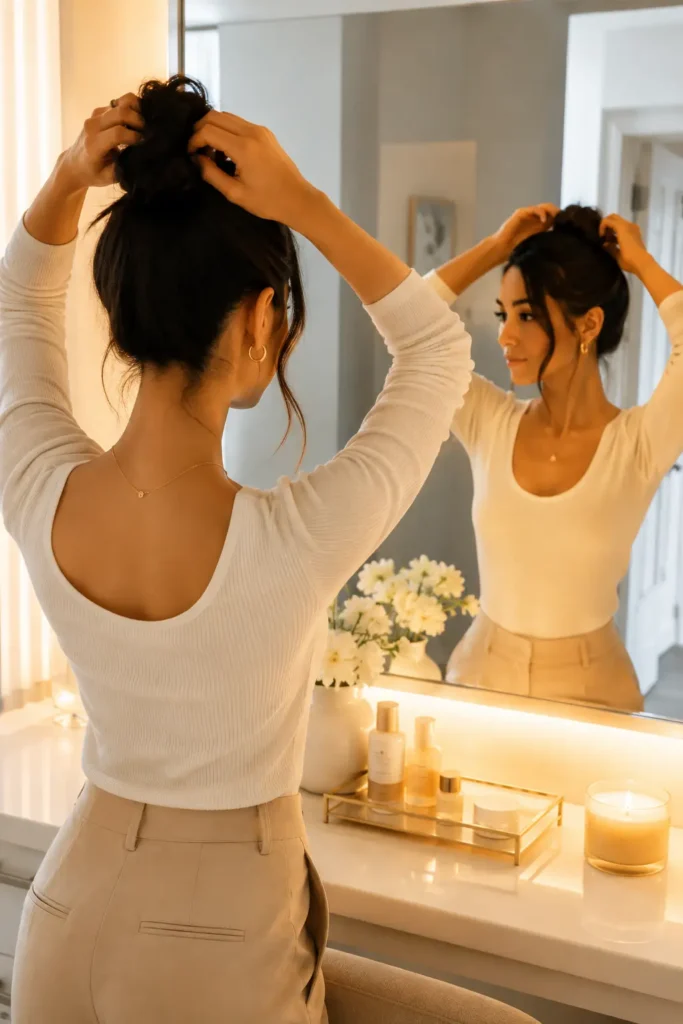
Your neck is vertical real estate. When hair sits down on your shoulders, it covers that space and visually compresses your upper body. A high bun, a ponytail, or even a loose clip pinned above the nape adds 2 to 3 inches of visible neck — which reads directly as height. This single change requires no shopping, no planning, and no outfit adjustment. It works over anything you’re already wearing.
17. Choose Smaller-Scale Prints Over Large, Bold Patterns
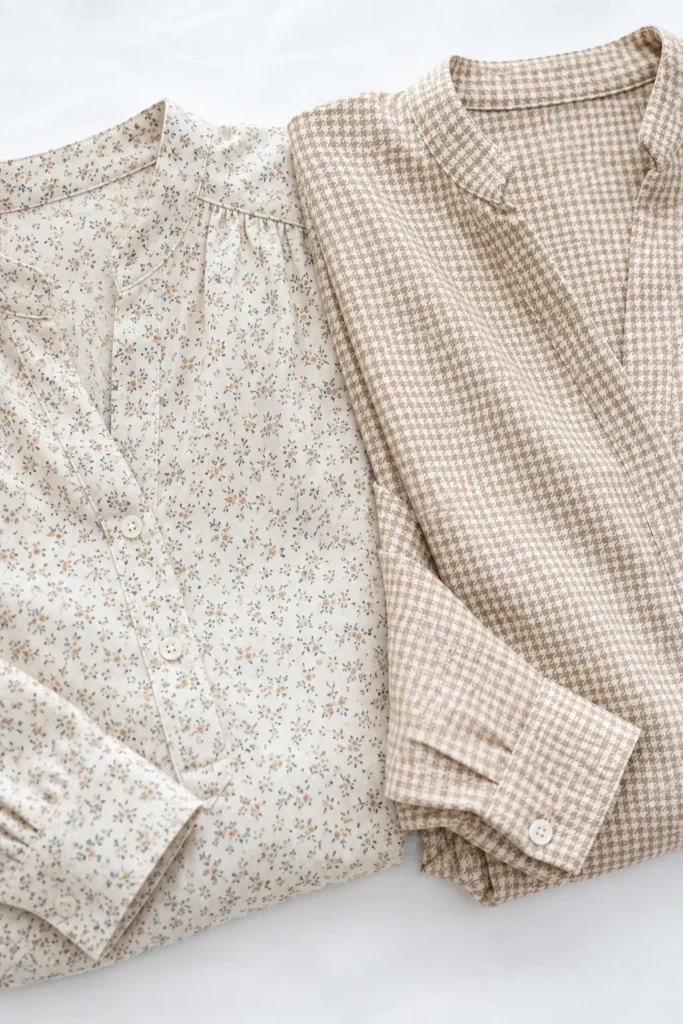
A print scaled to your body size reinforces your proportions. A print that overwhelms your frame — oversized florals, large abstract blocks, wide plaids — makes the fabric look like it’s wearing you. Small-scale prints, tight ditsy florals, fine houndstooth, and micro-checks all stay in proportion with a petite frame without demanding attention.
⚠️ Heads Up
The scale problem gets worse in photos than in the mirror. A print that looks proportional standing in your bathroom can read as costume-sized on camera because the lens flattens depth and makes patterns appear larger. If you know you’ll be photographed, go one size smaller in the print than you think you need to.
18. Use Vertical Details — Buttons, Pleats, Seams — to Pull the Eye Upward
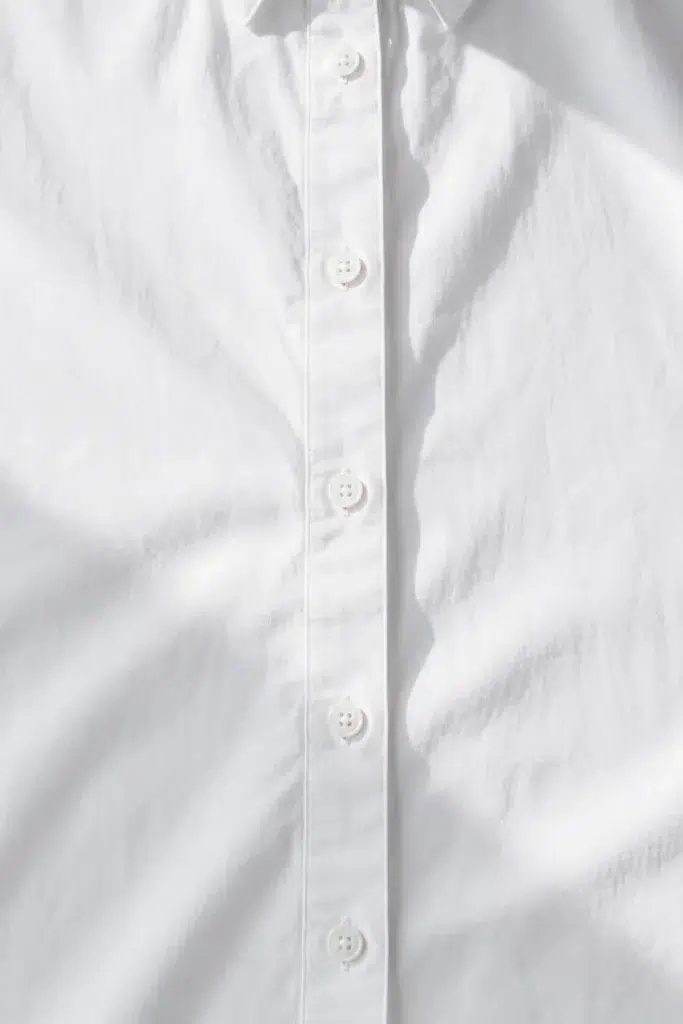
A column of buttons down the center front of a shirt does the same job as a vertical stripe — it gives the eye a track to follow straight up and down your body. Front-seam trousers, pintuck pleats, and center-front zippers all work the same way.
When you’re standing in the fitting room and can’t decide between two similar pieces, choose the one with a vertical detail running through the center. That detail is doing quiet, consistent work every time someone looks at you.
19. Check Every Proportion in a Full-Length Mirror Before You Leave
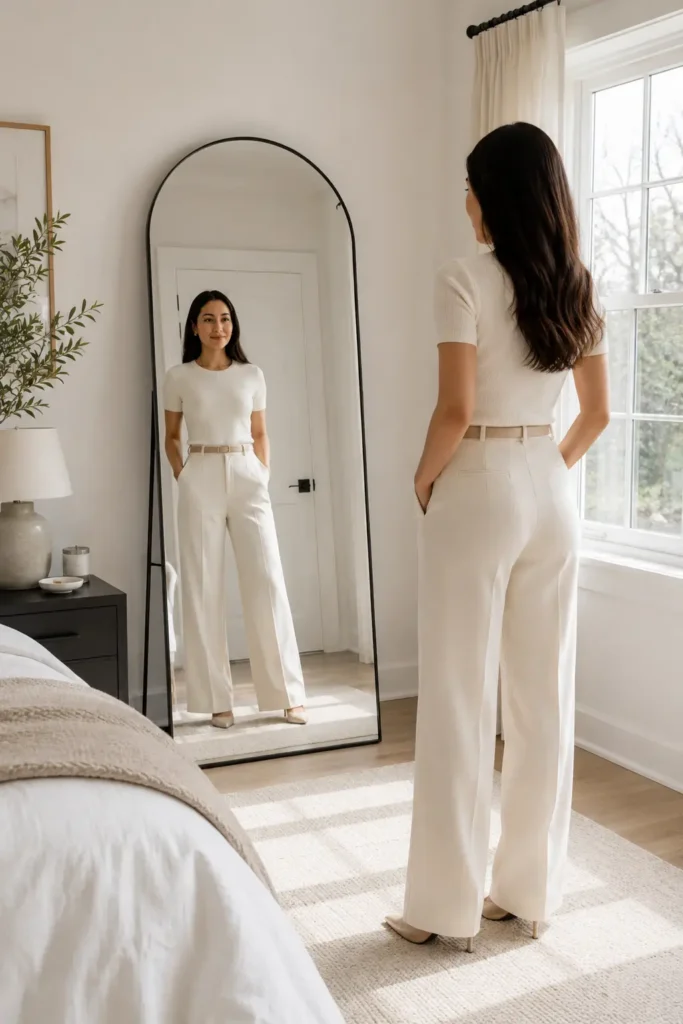
The mirror isn’t a confidence check — it’s a proportion audit. Stand back far enough to see yourself from crown to floor in one glance, then work top to bottom:
- Is there a clear, unbroken vertical line from shoulder to shoe?
- Does your waist appear defined, or has the tuck come loose?
- Is there a hard horizontal color break anywhere dividing your body?
- Does the hem land at or above the knee?
- Are the shoes extending your leg line or stopping it?
One “no” on that list means one fix before you walk out. Catching it here takes 30 seconds. Missing it costs you every one of the previous 18 steps.
20. Get Your Best Pieces Tailored to Your Exact Measurements
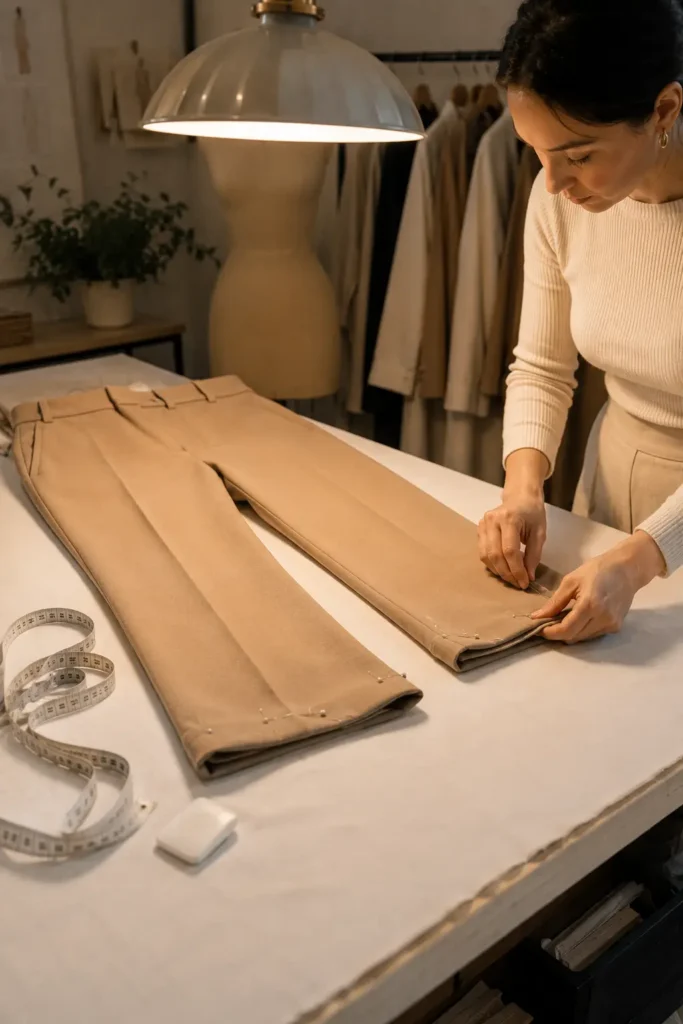
Off-the-rack clothes are cut for an average height that most petite women don’t share. Sleeves run long. Jacket shoulders drop. Trouser hems pool. A tailor fixes all of that — and a single session on your three or four most-worn pieces will do more for your proportions than any new purchase.
Hemming trousers costs roughly $15 to $30. Taking in a waist runs $20 to $40. Shortening a sleeve sits around $25 to $45. Bring the pieces that already fit your petite styling tricks checklist above — high-waisted, cropped, vertical-detailed — and let the tailor close the final gap between close-enough and exactly right.
5 Common Mistakes That Undo Everything
❌ Wearing baggy or oversized fits to hide your frame
Oversized clothes don’t camouflage — they overwhelm. Fabric that hangs past your hips or billows around your torso removes every visual reference point the eye uses to read height. Fit doesn’t mean tight. It means the garment follows your body without excess fabric hanging off it.
❌ Breaking the color line with one bold accent piece
A bright red belt with an all-navy outfit. A white bag with a black dress. These feel like personality — but they place a horizontal accent exactly where you don’t want the eye to stop. Accessories should blend, not interrupt. Save the bold color for one contained spot that doesn’t cut across your body horizontally.
❌ Skipping the heel entirely because of comfort
Nobody is asking for stilettos. A 1-inch block heel or low wedge changes your posture and leg line in a way a flat shoe physically cannot replicate. If heel pain is a genuine concern, look into cushioned insoles for low heels — the combination of a small lift with proper support is far more walkable than most people expect.
❌ Buying off-the-rack and assuming it fits well enough
Standard sizing assumes a height of around 5’4″ to 5’6″. If you’re shorter than that, the waist of your jeans sits lower than it should, your blazer shoulder seams drop past your actual shoulders, and your trouser hems drag. Each of those misalignments undoes a trick from this guide. Close-enough fit is one of the biggest silent height-stealers there is.
❌ Stacking too many tricks at once without checking the overall effect
Vertical stripes plus a bold print scarf plus a long pendant plus a patterned belt — individually, some of these work. Together, they compete. The eye has nowhere clean to travel. The full-length mirror check in Step 19 exists precisely for this reason. When the overall silhouette looks busy, something has to go.
Frequently Asked Questions
Quick Reference Card — Save or Screenshot This
20 Petite Styling Tricks That Make You Look Taller
What You Need
- 📏 Soft measuring tape
- 👖 High-waisted bottoms
- 👕 Fitted or cropped top
- 🔲 Thin belt (1 inch or under)
- 🧥 Cropped jacket or blazer
- 👝 Small structured bag
- 👠 Pointed-toe shoes
- 📿 Long vertical jewelry
- 🪞 Full-length mirror
- ✂️ Tailor contact
The 20 Steps
- Measure inseam + torso
- Single color family
- High-waisted bottoms
- Hem at/above the knee
- Vertical stripes only
- Tuck at natural waist
- V-neck or open neckline
- Cropped jacket only
- Small structured bag
- Thin belt at waist
- Pointed-toe shoes
- Match shoe to skin/pants
- Add a small heel
- No ankle straps
- Long vertical jewelry
- Hair up, neck exposed
- Small-scale prints
- Vertical details on garments
- Full-length mirror check
- Get key pieces tailored
The goal: one unbroken vertical line from shoulder to floor.